


Most visitors come to Muskegon State Park for Lake Michigan, the dunes, or a walk along the beach. Fewer realize that one of the park’s most interesting natural areas is tucked away behind the forest and dune hills.
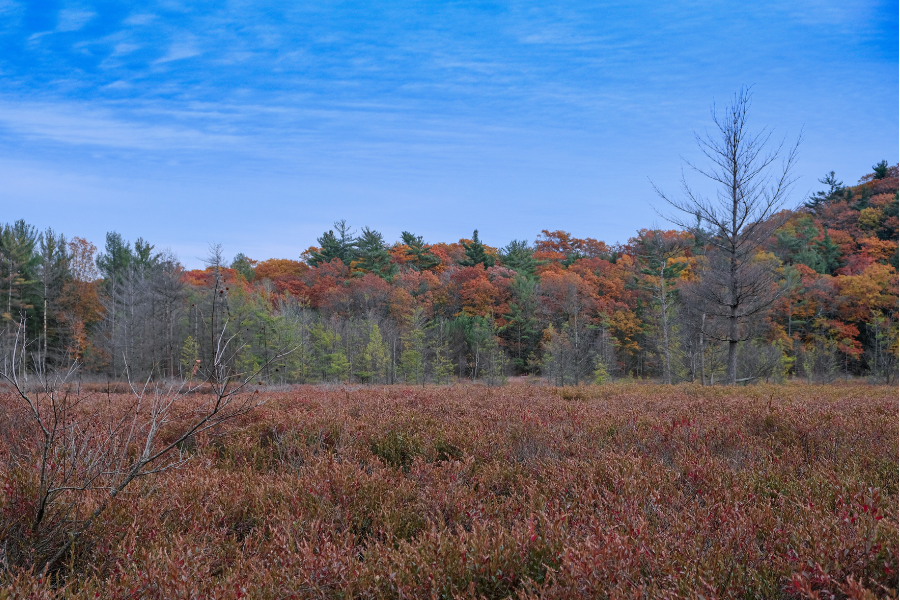
Lost Lake is a rare coastal plain marsh within Muskegon State Park in Muskegon County, Michigan. Reached by woodland trails, this unusual wetland is home to wetland plants, birds, wildlife, and scenery that changes with the seasons.
The Lost Lake Trail is considered easy, generally flat, and fairly wide in many areas. Visitors can reach Lost Lake from the Snug Harbor parking lot on Memorial Drive or from the Lost Lake Loop West trailhead at Muskegon Luge Adventure Sports Park on Scenic Drive.
Whether you enjoy hiking, birding, fall color, or finding places that feel a little removed from the everyday, Lost Lake is worth exploring.
What Is Lost Lake?
Despite its name, Lost Lake is not a traditional deep-water lake. It is a coastal plain marsh, a rare wetland ecosystem where water levels naturally rise and fall.
Lost Lake is surrounded by forested lowland, Lake Michigan sand dunes, and open natural areas. This combination of habitats provides a home for plants, waterfowl, shorebirds, and other wildlife.
The Land Conservancy of West Michigan worked with the Michigan Department of Natural Resources to permanently protect the Lost Lake property in 2008 and add it to Muskegon State Park. The 68-acre addition was made possible through support from more than 350 individuals and organizations.
What Is a Coastal Plain Marsh?
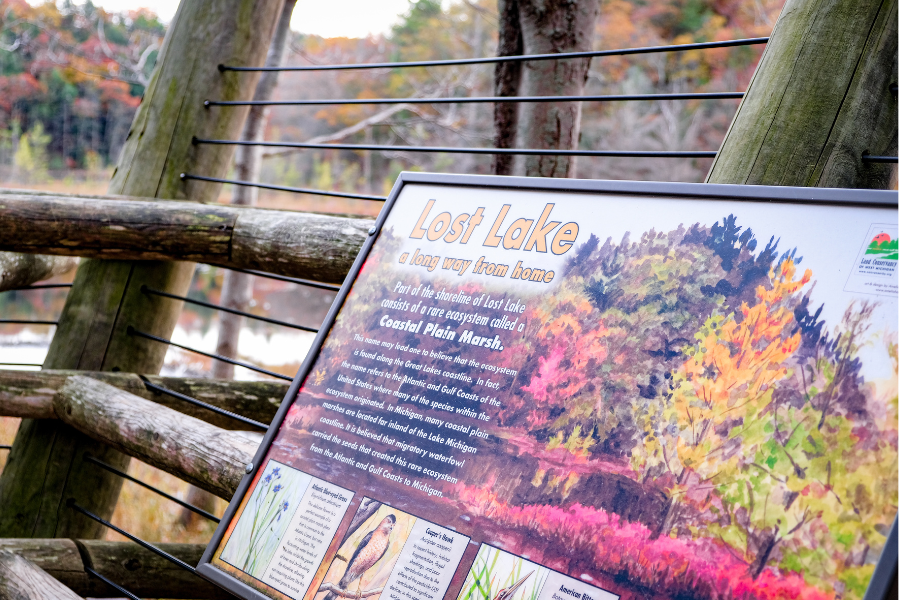
A coastal plain marsh is a rare type of wetland found in a shallow depression where water levels rise and fall over time. These changing conditions support plants and animals adapted to both wet and seasonally drier environments.
Despite the name, coastal plain marshes are not limited to ocean coastlines. They can also be found near portions of the Great Lakes. Lost Lake is recognized by the Michigan Department of Natural Resources as a unique coastal plain marsh within Muskegon State Park.
Because the amount of visible water can change with rainfall, groundwater, and seasonal conditions, Lost Lake may look different from one visit to the next. One visit might reveal more open water, while another may show more marsh vegetation. An interpretive sign at the Lost Lake Overlook helps explain the coastal plain marsh and why this ecosystem is unusual.
Did You Know?
Lost Lake isn't a traditional lake. Its changing water levels help create the conditions that support the unique plants and wildlife found here.
Why Is It Called Lost Lake?
The exact origin of the name “Lost Lake” does not appear to be formally documented, but there are a couple of possible clues in the landscape.
For starters, Lost Lake doesn't always look the same. Depending on seasonal conditions and water levels, visitors may see more open water during one visit and more marsh vegetation during the next.
The name may also come from the fact that it's genuinely hidden. Surrounded by forest and dune hills, Lost Lake can't be seen from park roads or parking areas. You have to follow a trail through the woods to find it, which makes discovering it feel like part of the adventure.
How Do You Get to Lost Lake?
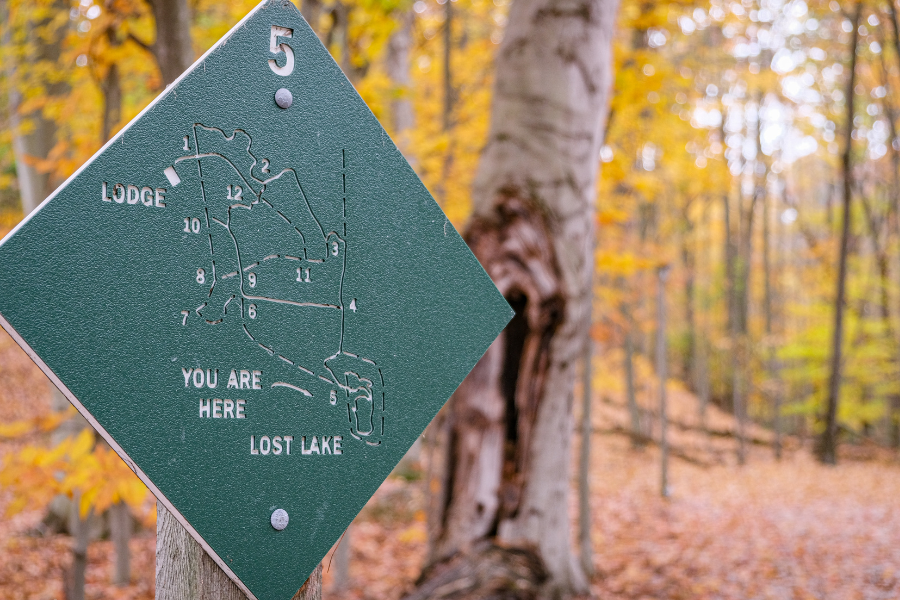
Visitors can reach the Lost Lake trail system from two locations within Muskegon State Park.
From Snug Harbor
Park in the Snug Harbor parking lot off Memorial Drive and follow the park trails toward Lost Lake.
From Muskegon Luge Adventure Sports Park
Visitors can also park at the Muskegon Luge Adventure Sports Park lot on Scenic Drive. The total route from this trailhead to Lost Lake and back using Lost Lake Loop West is approximately 3.2 miles.
The trail is:
- Easy
- Generally flat
- Fairly wide in many sections
- Rustic and unpaved
- Surrounded by forest for much of the route
The route follows natural dirt trails through the woods, so conditions may vary with rain, snow, and seasonal changes.
Accessible Ways to Experience Lost Lake
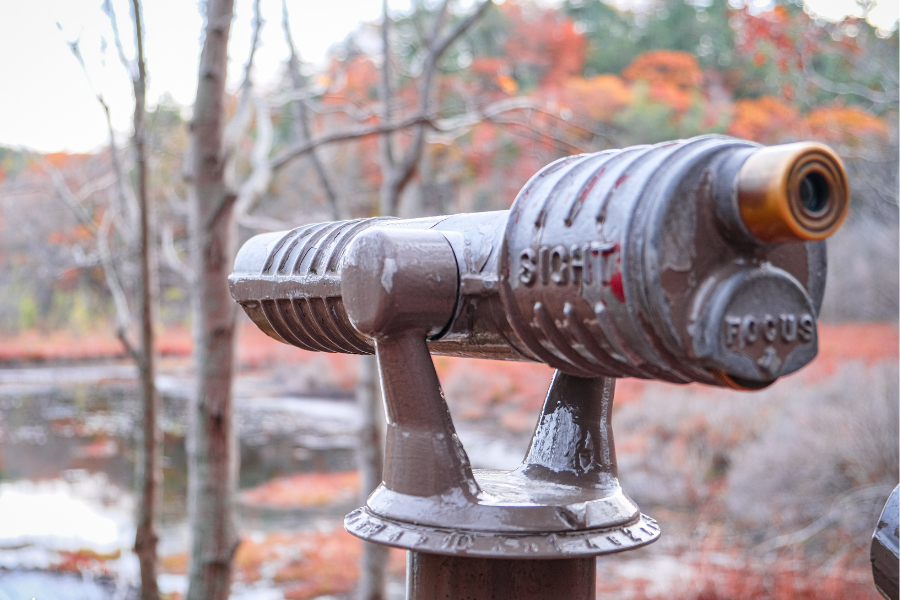
The Loop Trail from Muskegon Luge Adventure Sports Park leads to a wooden viewing platform overlooking Lost Lake. The platform provides a place to stop, take in the marsh, and look for birds, wildlife, and seasonal changes across the wetland.
An EnChroma-enabled scenic viewer is available at the Lost Lake Overlook. The viewer is designed to help visitors with red-green color blindness experience more of the landscape’s colors.
Visitors who would benefit from additional mobility support can reserve a free Track Chair through Muskegon State Park. These all-terrain chairs can expand access beyond traditional wheelchairs and are available at no cost. Advance reservations are required.
Learn more about reserving a Track Chair at Muskegon State Park HERE
The surrounding hiking trails remain rustic dirt trails. Visitors should consider current trail conditions and individual mobility needs when planning a visit.
Birding and Wildlife at Lost Lake
Lost Lake’s combination of marsh, forest, wetland, and dune habitat makes it an interesting place for birding and wildlife observation.
Birds reported around the Lost Lake area include:
- Louisiana Waterthrush
- Winter Wren
- Black-throated Green Warbler
- Barred Owl
- Green Heron
- Acadian Flycatcher
- Mourning Dove
- Local and migrating waterfowl and marsh birds
The Land Conservancy of West Michigan identifies Lost Lake as habitat for waterfowl and shorebirds. Visitors may also see carnivorous pitcher plants around the marsh.
You may also spot amphibians, reptiles, and other wildlife that call West Michigan's wetlands, forests, and dunes home.
Wildlife sightings vary by season, weather, and time of day. Move quietly, observe wildlife from a distance, and leave plants and natural materials where you find them.
Visit Lost Lake in Every Season
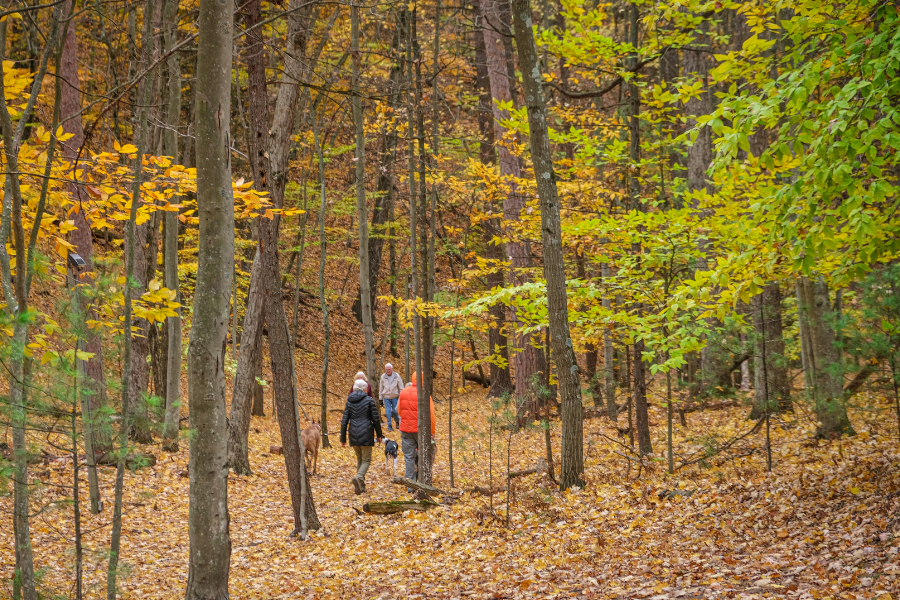
Lost Lake changes throughout the year, giving visitors a different view of the marsh and surrounding forest in each season.
Spring: Watch for returning birds, fresh green growth, and seasonal changes in the marsh.
Summer: The forest canopy and wetland vegetation offer a quieter inland contrast to the beaches and open dunes of Muskegon State Park.
Fall: Fall is one of the most popular times to visit. Changing leaves surround the trail, and cooler temperatures make it a great season for a walk through the woods.
Winter: Snow changes both the trail and wetland scenery. Depending on conditions, visitors may explore the area by cross-country ski or snowshoe.
Continue Beyond Lost Lake
Lost Lake is easy to combine with other Muskegon State Park experiences, making it a great addition to a day outdoors.
Lost Lake Trail connects with other Muskegon State Park trails, including Loop to Loop and Scenic Ridge. These routes can lead visitors deeper into the park and toward the Muskegon Blockhouse.
Consider combining your Lost Lake hike with:
- A stop at the Muskegon Blockhouse
- Outdoor activities at Muskegon Luge Adventure Sports Park
- Time at Snug Harbor
- A walk along Lake Michigan
- More hiking within Muskegon State Park
Know Before You Go
Lost Lake is located within Muskegon State Park in Muskegon County, Michigan. Visitors can access the Lost Lake trail system from the Snug Harbor parking lot on Memorial Drive or the Muskegon Luge Adventure Sports Park parking lot on Scenic Drive.
From Muskegon Luge Adventure Sports Park, Lost Lake Trail West is approximately 3.2 miles. The trail follows rustic, unpaved woodland paths, and conditions can vary with weather and the season.
A valid Michigan Recreation Passport is required for vehicle entry to Muskegon State Park. Dogs are welcome but must remain on a 6-foot leash and under their owner’s immediate control.
For visitors looking for an accessible way to experience Lost Lake, a wooded route leads to the wooden viewing platform overlooking the marsh from the Muskegon Luge Adventure Sports Park side of the trail system. Free Track Chairs are available through Muskegon State Park with advance reservations.
Consider bringing water, comfortable walking shoes, seasonal layers, bug protection when needed, binoculars, and a trail map. If you're bringing your dog, don't forget a leash and waste bags.
Frequently Asked Questions About Lost Lake
What is Lost Lake?
Lost Lake is a rare coastal plain marsh within Muskegon State Park, surrounded by wetland, forest, and dune habitat.
Is Lost Lake accessible?
Yes. Visitors can access the Lost Lake Overlook and reserve a free Track Chair through Muskegon State Park with advance reservations.
Can I visit Lost Lake in winter?
Yes. Depending on trail and weather conditions, cross-country skiing and snowshoeing may be options during the winter months.
Find a Quieter Side of Muskegon State Park
Some of Muskegon County’s most memorable places are not visible from the road. Lost Lake is one of them.
Follow the trail beyond the beaches and dunes most often associated with Muskegon State Park, and you'll discover a side of the park many visitors never see. Forest, wetland, and open natural areas come together in a landscape that feels surprisingly tucked away.
If you've visited Muskegon State Park for the beach, the Blockhouse, or the dunes, consider adding Lost Lake to your next trip. Bring your binoculars, follow the trail, and see what you can find.

Watch On TikTok!
