

A Century of Baseball in Muskegon County
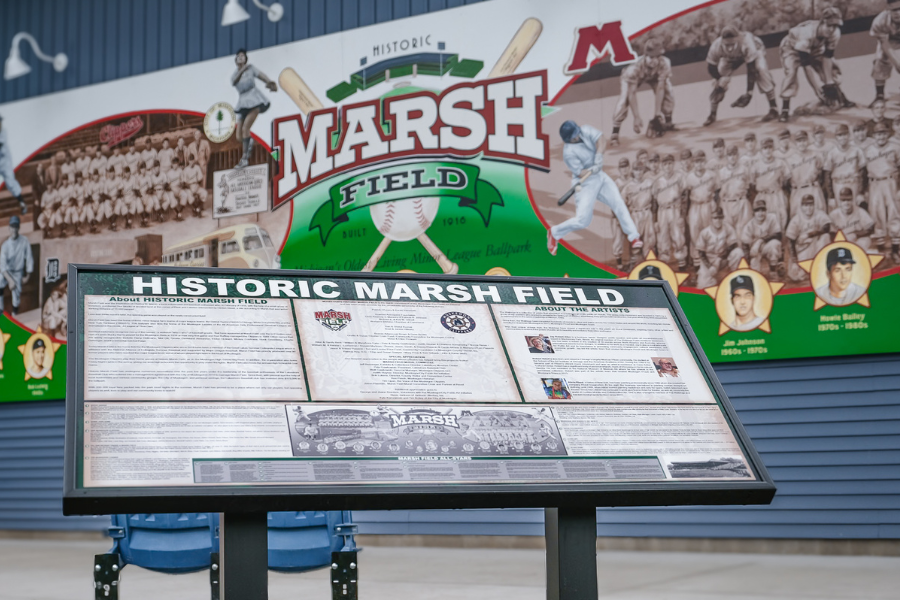
Baseball fans, this one’s for you! Muskegon has a proud baseball story that stretches from the Muskegon Lassies of the All-American Girls Professional Baseball League to the historic Marsh Field, one of the oldest minor league ballparks still in use in Michigan.
The Muskegon Lassies Steal the Show
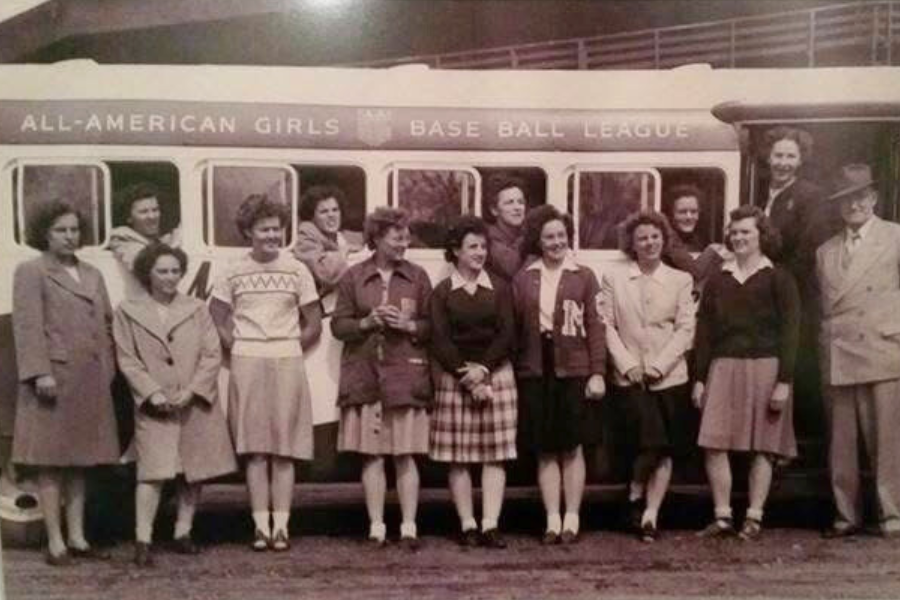
If you’ve seen A League of Their Own, you know the league. Muskegon was part of it from the very beginning, with the Lassies taking the field at Marsh Field in 1946. Local fans packed the stands, especially for night games under the brand-new light towers – a first for the stadium. The Lassies’ presence left a lasting mark on Muskegon baseball, celebrating the women who changed the face of the game and becoming a permanent part of the city’s sports history.
Key Players Who Made History
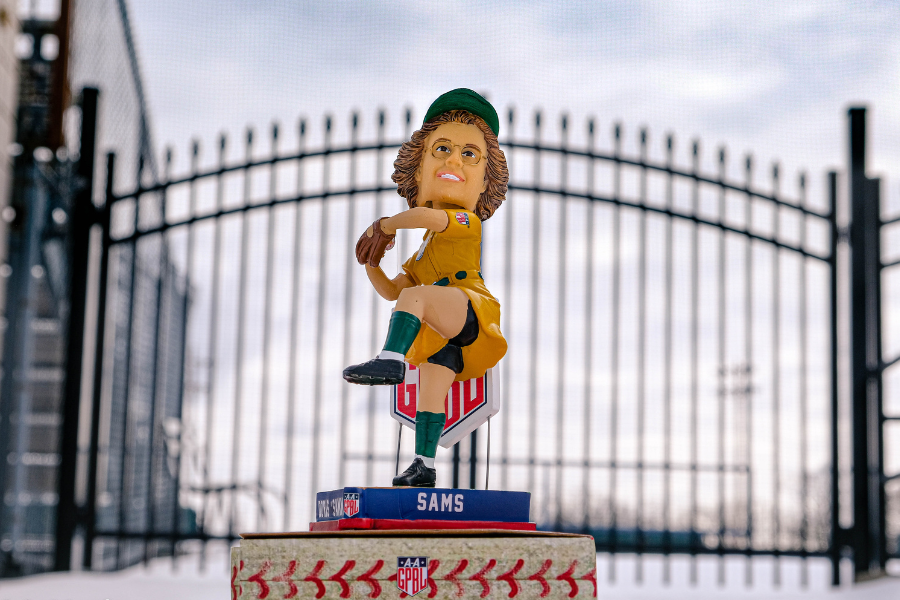
The Lassies weren’t just entertaining crowds. In 1947, they captured the pennant, led by star pitcher and outfielder Doris “Sammy” Sams. That same year, she threw a perfect game, maintained a batting average over .300 for the next four seasons, and earned All-Star honors at both pitcher and outfielder. Her versatility made her one of the league’s most respected players, and she was named Player of the Year in 1947. Decades later, her achievements were honored with a limited-edition bobblehead from the National Bobblehead Hall of Fame in 2021.
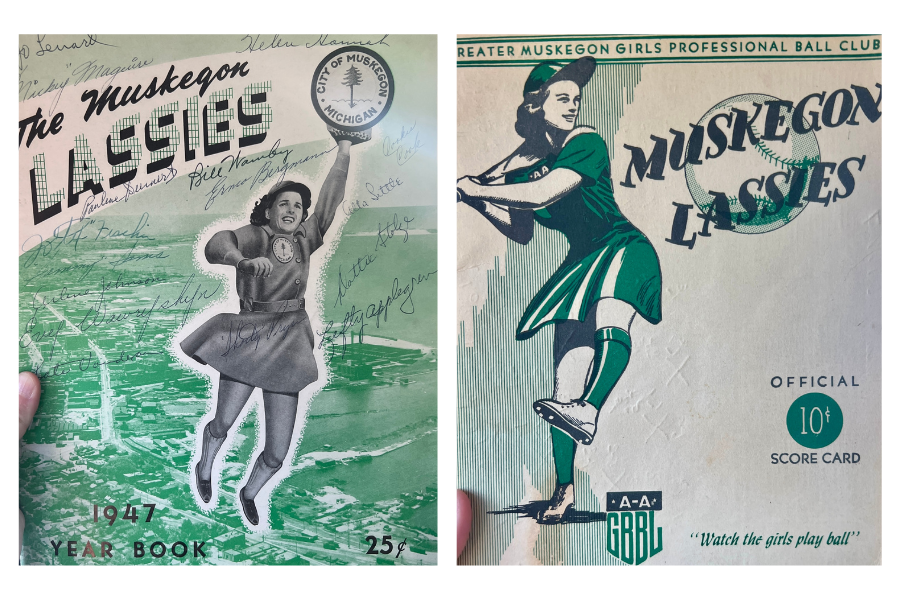
But Sams wasn’t the only standout. Muskegon also produced Beatrice “Bea” Allard, a fireball pitcher known for her deceptive sidearm delivery, whose career was cut short by injury. Following her was Doris “Little Cookie” Cook, another pitcher and outfielder, who later joined her sister Donna “Cookie” Cook on the South Bend Blue Sox. These Muskegon natives are celebrated in the Baseball Hall of Fame’s “Women in Baseball” exhibit and the Muskegon Area Sports Hall of Fame, ensuring their place in the story of the All-American Girls Professional Baseball League in Muskegon.
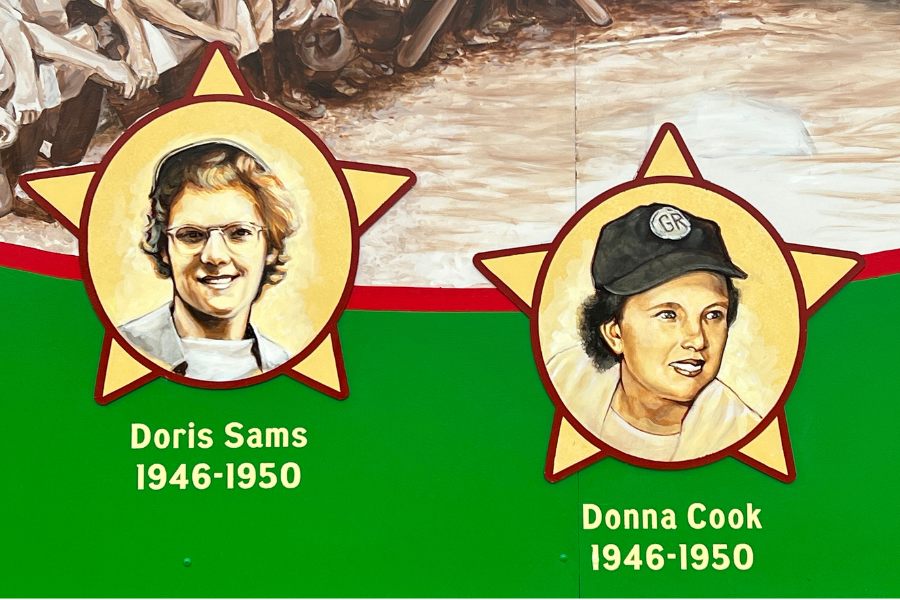
Together, Sams, Allard, and the Cook sisters remind us that Muskegon baseball history is as much about the women who redefined the sport as it is about the men who played it, and that their influence continues to inspire fans and players long after the Lassies’ final season at Marsh Field in 1950.
Marsh Field: Over a Century of Baseball
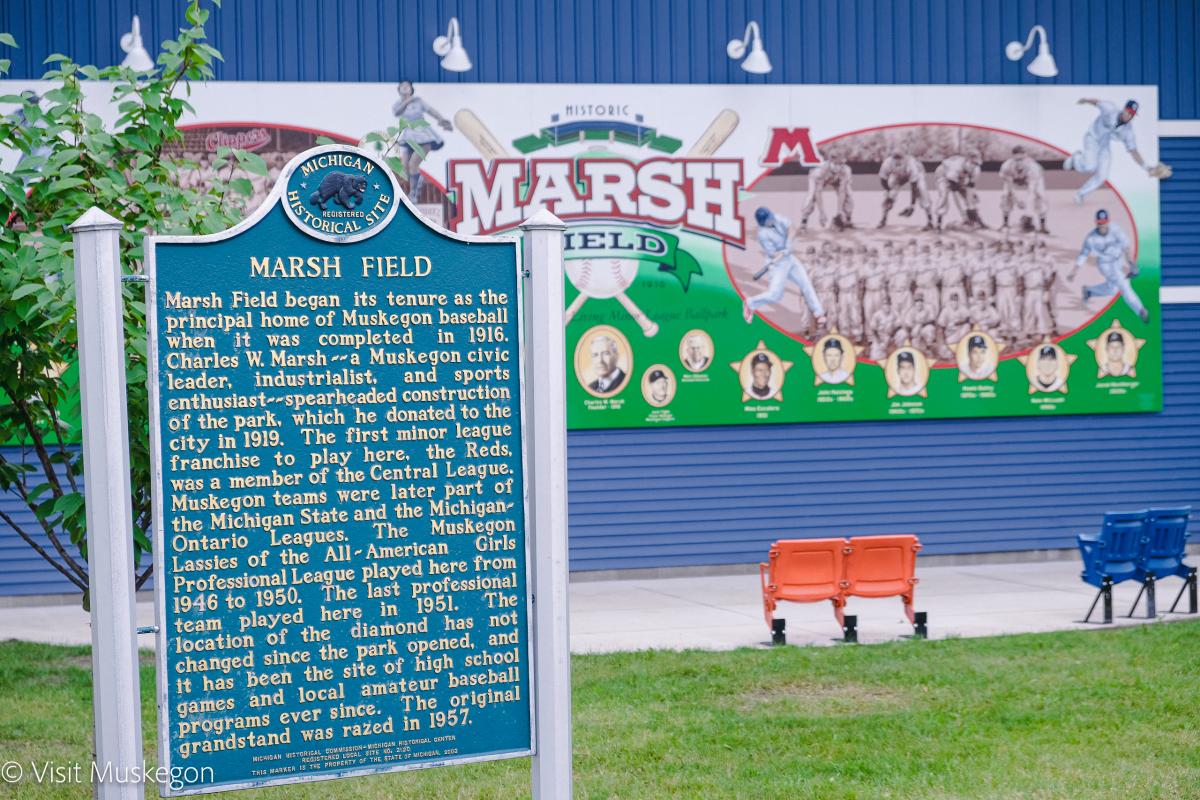
Marsh Field opened in 1916, thanks to the vision of local baseball champion Charles W. Marsh. At its peak, the stadium seated more than 6,000 fans and hosted everything from high school teams to minor league affiliates.
A Hub for Local and Professional Teams
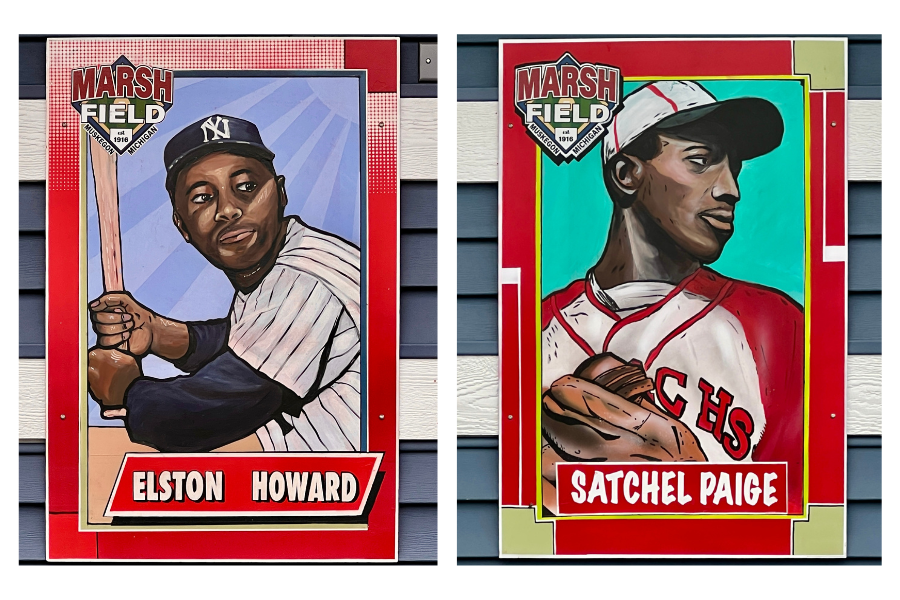
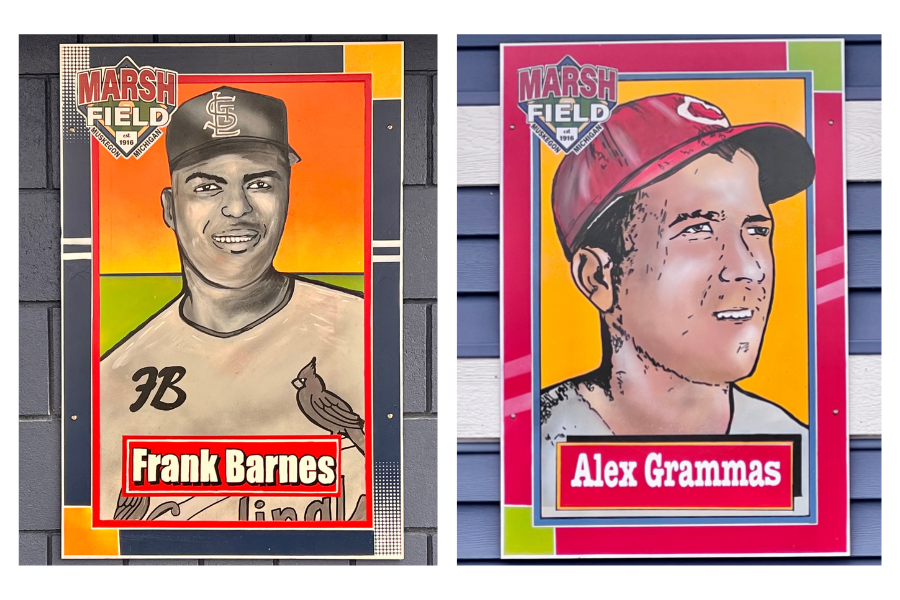
Over the years, Marsh Field has welcomed an incredible range of talent. The Muskegon Reds, Muskies, Anglers, and Clippers all played here, giving fans a steady stream of professional and semi-pro baseball. In 1949, infielder Alex Grammas played for the Muskegon Clippers, contributing to the team’s strong lineup. The following year, the Clippers became a Class A farm team of the New York Yankees, featuring two of the franchise’s first Black players: pitcher Frank Barnes and catcher-outfielder Elston Howard.
Howard’s season in Muskegon was historic. After starring in the Negro Leagues, he began his integrated professional baseball career at Marsh Field. Just five years later, he broke barriers again as the first Black player for the New York Yankees and later became the first Black coach in the American League.
The field also hosted legendary exhibition games. Among the most famous visitors was Satchel Paige, star pitcher of the Kansas City Monarchs, who played in Muskegon in the early 1940s. Paige went on to become the first Negro League player inducted into the Baseball Hall of Fame in 1971.
A Legacy That Lives On
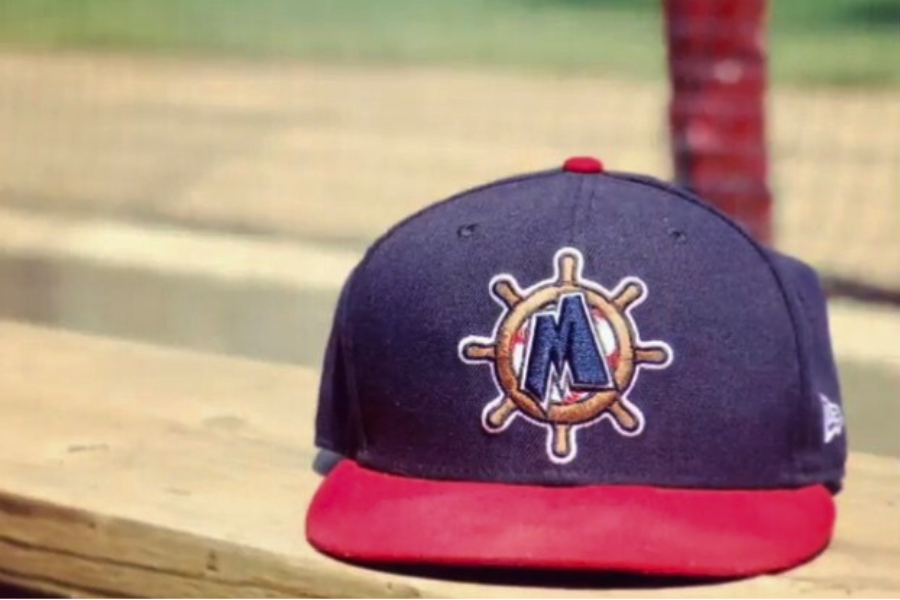
Marsh Field remains a living time capsule of Muskegon baseball history, hosting generations of players and fans. Today, it is home to the Muskegon Clippers of the Great Lakes Summer Collegiate League, along with local high school and community teams. Preservation efforts have kept the park in top shape, allowing it to retain its distinction as the oldest minor league ballpark still in use in Michigan.
Visiting Marsh Field is more than a game – it’s a connection to decades of baseball history. The crack of the bat and the roar of the crowd echo the cheers of those who once filled the stands for the Muskegon Lassies, professional teams, and legendary exhibition players. Each season continues the tradition, linking today’s Clippers fans to generations of Muskegon baseball supporters.